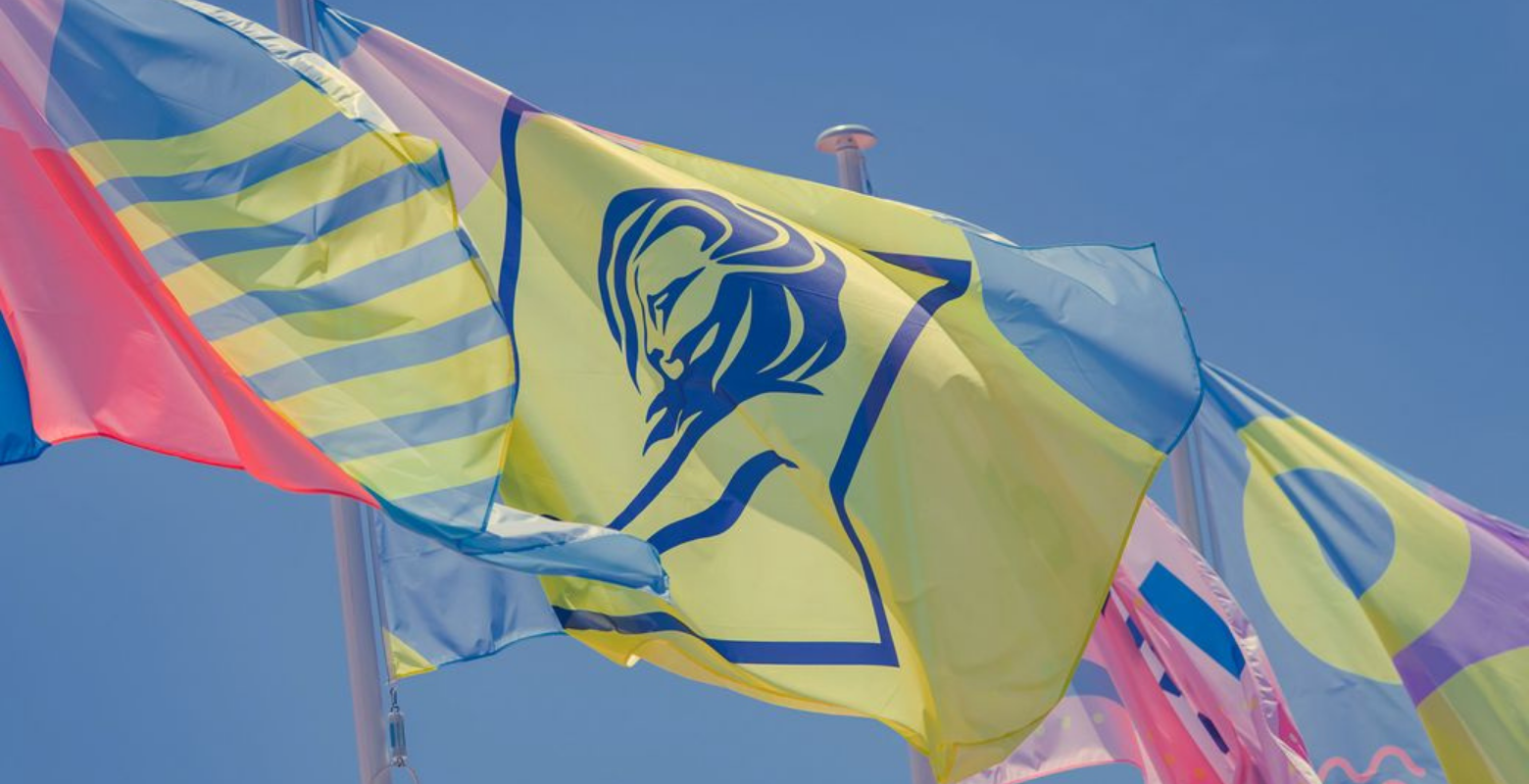
As advertising's biggest week unfolded on the French Riviera, the celebration ran on the beach while the decisions that will reshape the industry were made offshore.
CANNES, France — Cannes Lions 2026 was, once again, a festival of bread and circuses. The creative staff who fill the beaches and the award shows were handed a week of celebration; the decisions that will determine what those same people do for a living in the years ahead were taken, over their heads, in hotel suites and on yacht decks half a mile offshore. As in Juvenal's Rome, the spectacle kept the crowd content while the consequential business went on elsewhere.
For one week each June, the advertising industry gathers on this stretch of the French Riviera to hand itself trophies for creativity. This year, the most telling event was something a company chose not to do.
WPP, named the festival's top creative group as recently as last year, gave up the beachfront space that had anchored its presence at the Cannes Lions International Festival of Creativity for years. The site, Miramar Beach, was taken over by PMG, an independent performance-marketing firm that filled it with an artificial-intelligence showcase. PMG's founder, George Popstefanov, has said he forbids his employees from using the word "agency," because he considers the company a technology firm that happens to do marketing.
The handoff captured a shift that ran through the 2026 festival, which closes Friday. The legacy holding companies that long defined Cannes are pulling back, financially and physically, while technology and A.I. firms move in, a transition one trade publication likened to a version of the CES electronics show by the sea.
That decision was made under severe pressure at home. WPP reported 2025 revenue of £13.55bn, down 3.6 per cent on a like-for-like basis. Its chief executive, Cindy Rose, has introduced a restructuring plan, branded Elevate28, that dismantles the traditional holding-company model in favour of a single integrated company and targets £500m in annual savings by 2028. WPP's head count had already fallen to about 98,655 at the end of 2025 from roughly 108,000 a year earlier, with severance costs more than doubling. Against that ledger, a beachfront marquee was an expense that could not be justified.
The festival itself somewhat offered the same consolidation. Cannes Lions retired its Creative Company of the Year award this year, saying that after large-scale mergers, including Omnicom's acquisition of Interpublic in late 2025, the prize no longer offered a consistent benchmark.
Much of the week's significant business took place away from the awards stages, at hotels and on yachts along the coast. The deals that emerged were about data, streaming inventory and A.I. infrastructure.
Omnicom Media Group used the opening day to announce its first partnership with Netflix, integrating audience data from its Acxiom unit into the streaming service's advertising system. The arrangement, already operating in the United States with international expansion planned by year's end, allows brands to create A.I.-generated "digital twins" of products such as cars or phones and place them inside Netflix programming as virtual product placements. It was one of several A.I. and retail-media announcements Omnicom staged across the week.
The creator economy was a second focus of dealmaking. United Talent Agency opened what it called UTA Beach, its largest presence at the festival, bringing more than 120 clients. Talent representatives said brand arrangements with online creators have shifted from one-off campaigns towards long-term contracts. The platforms arrived with new products of their own: Meta consolidated its creator tools into a single marketing hub, and TikTok introduced an A.I. agent to help advertisers build campaigns. Senior executives also conducted business at the Hotel du Cap-Eden-Roc in nearby Antibes, away from the festival's main venue.
Artificial-intelligence companies used the festival not to advertise their tools but to position themselves as the layer through which marketing itself would run. OpenAI made its first appearance at Cannes, with its chief revenue officer appearing alongside the chief marketing officers of Google and JPMorganChase in a session on marketing in the age of A.I. discovery. Adobe, meanwhile, announced enterprise partnerships that placed major agency groups (Accenture Song, Omnicom, Stagwell and WPP) alongside the A.I. firms Anthropic and Microsoft in a shared system for so-called agentic A.I., which can carry out sequences of tasks with limited human oversight.
The arrangements underscored an uneasy dependency: the agency groups are building their own operations atop the very companies best placed to compete with them for the client relationship.
Even as A.I. dominated the conversation, the festival's juries directed their highest honours towards conspicuously human work. The Design Grand Prix went to a rebrand of Apple TV, which the jury president, Greg Quinton, praised as "gloriously human-made" and, "at a time obsessed with tech threats," a "beautiful rebellion." Top craft prizes also went to handmade work for the appliance maker De'Longhi and a film for Coinbase.
The Creative Data Grand Prix went to BCP, a Peruvian bank, for a system that lets theft victims block their accounts at store payment terminals when they no longer have a phone. The same category's top prize had been withdrawn the previous year after A.I.-generated content was found to have misrepresented a campaign's results, a history that lent this year's selection the character of a correction.
Day-three winners followed a similar pattern, rewarding ideas over automation: Uber Eats took the Media Grand Prix for a Super Bowl app feature, KitKat won in public relations for a campaign built around a real theft of its bars, and Heineken won in social and creator for a messaging-app promotion.
The festival spent the past year trying to restore confidence in its own benchmark. After a 2025 scandal in which several winning entries were withdrawn, beginning with a campaign found to contain A.I.-altered news footage, organisers introduced tougher rules, including dual A.I.-and-human fact-checking, mandatory senior sign-offs and an integrity council with the power to impose multiyear bans. Entries fell about 25 per cent this year, according to Campaign, a figure the publication reported but that has not been independently confirmed.
The retrenchment played out against the industry's contraction. WPP alone shed close to 9,000 jobs over the year in which it also gave up its beach. In a commentary published during the festival, the trade publication Adweek argued that the event "leaves too many of its builders outside."
By week's end, this is what I see: The holding companies are reorganising themselves around technology; the A.I. firms are positioning themselves as the industry's operating system; online creators are signing the long-term deals that once belonged to agencies; and the juries, for now, are still rewarding the human idea. The crowd got its circus.